Choosing the right materials for exterior doors is crucial. Homeowners often ask, "what materials are best for exterior doors?" According to industry reports from the National Association of Home Builders (NAHB), durability, security, and energy efficiency are primary concerns for door selection. Steel, fiberglass, and wood are the top contenders, each offering unique advantages and drawbacks.
Steel doors are highly resilient and resistant to weather. They provide excellent security and insulation. However, they can be prone to rust in humid climates. Conversely, fiberglass doors mimic the look of wood but are more durable and energy-efficient. They resist warping and fading, making them suitable for various environments. Yet, they may cost more upfront.
Wood doors bring charm and warmth but require regular maintenance. They can be susceptible to rot and insect damage over time. Therefore, the choice of material ultimately depends on climate, aesthetic preferences, and maintenance willingness. Understanding these factors is essential in making a wise investment for your home. Evaluating long-term performance is key.
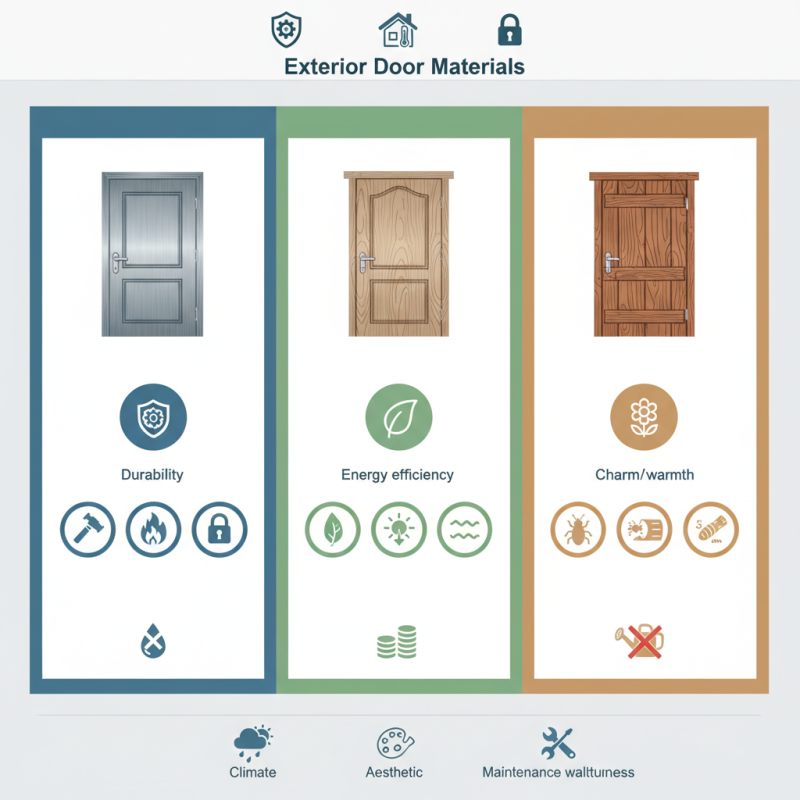
Choosing the right material for your exterior doors is crucial. It influences durability, insulation, and aesthetics. A solid choice can drastically improve your home's energy efficiency and security. Various materials offer unique benefits. Wood, fiberglass, and steel are common options. However, each has its strengths and weaknesses.
Wood doors exude warmth. They can be customized easily but may require regular maintenance. They are prone to weather damage if not treated. Fiberglass doors resist dents and offer excellent insulation. They can mimic wood at a lower cost, yet may lack authenticity. Steel doors are strong and secure. However, they can suffer from rust, requiring protective coatings.
**Tips for Selection:**
Consider your climate. Hot, humid areas may benefit from fiberglass. Cold regions might need sturdier options. Always check the door's energy rating. A high-rated door saves money in the long run. Don't forget the aesthetics. Your door affects curb appeal. Balancing style and functionality is vital. Personal preferences should guide material selection.
| Material Type | Durability Rating | Energy Efficiency | Maintenance | Cost Range |
|---|---|---|---|---|
| Steel | High | Good | Low | $200 - $500 |
| Fiberglass | Very High | Excellent | Very Low | $300 - $800 |
| Wood | Moderate | Good | Moderate | $400 - $1000 |
| Aluminum | High | Good | Low | $250 - $600 |
| Vinyl | Moderate | Good | Very Low | $150 - $400 |
: The three main materials are wood, fiberglass, and steel. Each has unique strengths and weaknesses.
Wood offers a classic look but requires regular maintenance. It may warp in extreme weather conditions.
Fiberglass doors resist dents and scratches. They also provide good insulation and last over 30 years.
Yes, steel doors are strong and secure. They withstand harsh elements but can dent and rust without proper care.
Wood doors expand and contract with humidity. This can create gaps and drafts over time.
Steel doors need regular inspections. Proper coating is essential to prevent rust and corrosion.
When considering what materials are best for exterior doors, it's essential to understand the significance of material selection. Exterior doors not only provide security but also play a crucial role in a home's energy efficiency and aesthetic appeal. Commonly used materials include wood, fiberglass, and steel, each having its own set of advantages and disadvantages regarding durability and performance.
A comparative analysis reveals that wood offers natural beauty but may require more maintenance, whereas fiberglass provides excellent insulation and is resistant to weather damage. Steel, on the other hand, is known for its strength and security but can be prone to rust if not properly coated. Evaluating cost versus longevity is also vital, as investing in higher-quality materials can lead to better long-term value and enhanced resilience against the elements. Ultimately, choosing the right material for exterior doors is a balance between durability, maintenance, and overall cost-effectiveness.

 Orix Steel