Home security is moving beyond metal keys, peepholes, and isolated alarm systems. Today, a phone can unlock a door, verify a visitor, and send an alert within seconds. This is the practical reality behind how smart home technology is changing door security.
Parks Associates’ 2024 smart home research identifies security as one of the strongest drivers of connected-home adoption. IDC’s Worldwide Smart Home Device Tracker also places smart security devices among the industry’s closely monitored growth categories. These findings reflect rising interest in smart locks, video doorbells, biometric access, and remote entry management. A real example is a homeowner receiving a delivery alert while working across town, then granting temporary access without sharing a physical key.
The change is significant. It is not flawless.
Bruce Schneier, a respected security technologist, states, “Security is a process, not a product.” His principle applies directly to connected doors. A smart lock still depends on strong passwords, updated firmware, secure Wi-Fi, and careful user permissions. One weak account can undermine an expensive device. NIST’s IoT cybersecurity guidance reinforces this need for secure configuration, authentication, and ongoing updates.
The most reliable systems combine convenience with visible safeguards. They record entry times, detect unusual activity, and preserve manual access during outages. Yet privacy concerns, battery failures, installation errors, and confusing apps remain real barriers. Smart technology can strengthen a door, but it cannot replace thoughtful security habits. The future looks promising, although the industry still has important questions to answer.
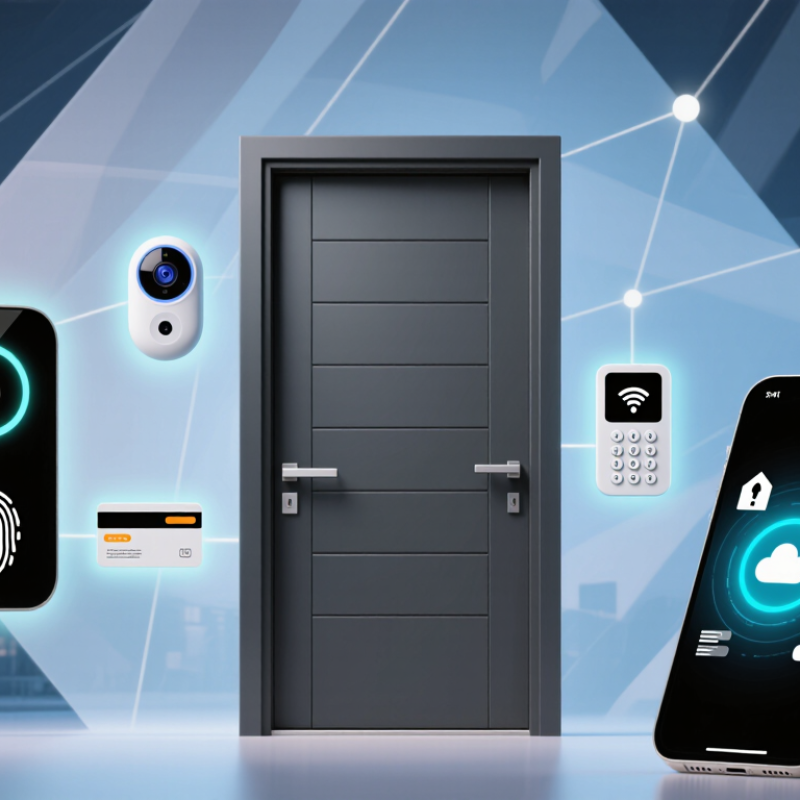
Smart-home security now combines locks, sensors, cameras, and cloud control. A smart lock can replace physical keys with a PIN, phone command, or temporary access code. Door sensors report whether an entrance is open, closed, or forced. Small details matter. A camera can show a delivery area, while motion alerts identify unusual activity near the doorway. Together, these devices create a clearer security picture than one lock alone.
Cloud control allows homeowners to check the door remotely and review access logs. However, convenience depends on strong passwords, multi-factor authentication, and reliable internet service. A disconnected system may delay alerts or block remote commands. Battery-powered locks also need regular testing. Batteries fail. Local access should remain available during outages. No system is perfect, and excessive notifications can make residents ignore important warnings. Careful placement matters too; a camera should cover the entrance without exposing unnecessary private spaces.
Tips: Test every device monthly, including backup keys and manual locking. Use unique passwords and update device software promptly. Keep sensors away from metal surfaces that interfere with signals. Adjust camera angles to reduce blind spots and protect neighbors’ privacy. Store emergency contact details offline. A simple routine often protects better than complicated settings nobody checks.
Smart home technology is moving door security from a physical lock to a connected safety system. Grand View Research forecasts annual market growth above 20%, showing strong demand for these solutions. The forecast reflects rising interest in remote access, real-time alerts, and household automation. A homeowner can receive a warning when a door opens unexpectedly. They can also check access activity from a phone while away. This changes security from a passive barrier into an ongoing monitoring process.
The practical details matter. A door sensor may detect movement within seconds. A connected camera can show whether a delivery person is waiting outside. Temporary digital access can reduce the need for copied keys. Professional installers still recommend strong passwords and regular software updates. They also check battery levels and network coverage during installation. Small failures remain possible. A weak connection can delay an alert. A dead battery can disable an important feature.
Market growth above 20% also deserves careful interpretation. Forecasts indicate opportunity, not guaranteed household savings or perfect protection. Privacy settings should be reviewed before storing video or entry records. Families should decide who can view alerts and how long information remains available. Older users may prefer physical controls alongside mobile applications. Good security design includes an offline fallback. The strongest systems combine reliable hardware, informed users, and realistic expectations. Mistakes still happen. That is why regular testing matters.
Smart home technology is changing door security through four access paths: biometrics, passcodes, phones, and remote unlocking. A fingerprint reader can recognize an approved resident within seconds, even when hands are full. Facial recognition may help at a dark entrance, but poor lighting, wet skin, or a new hairstyle can reduce accuracy. Biometrics are convenient, not perfect.
Passcodes offer a practical alternative for family members, cleaners, or short-term guests. A household can create temporary codes and remove them after use. Long, unique codes are safer than birthdays or repeated numbers. Phones add another layer, using encrypted connections and proximity checks to confirm entry. Still, a lost phone or weak account password can create serious problems. The lock still matters.
Remote unlocking is useful when a delivery arrives during a work meeting or a relative needs urgent access. Before tapping the button, residents should verify the camera view, user identity, and connection status. Activity logs can show when the door opened, which supports accountability after an incident. However, cloud outages, dead batteries, and poor Wi-Fi can interrupt access without warning. I have found that households often focus on advanced features and overlook simple habits, such as testing backup keys and updating access lists. Security improves when technology supports careful routines, rather than replacing them.
How Smart Home Technology Is Changing Door Security?
Risk Baseline: The FBI Recorded Over 847,000 U.S. Burglaries in 2022
In 2022, the FBI recorded more than 847,000 burglaries in the United States. This figure creates a serious risk baseline for homeowners and property managers. It does not mean every burglary involved a smart door. Still, doors remain important control points. A connected sensor can report whether a door is closed, opened, or left ajar. A phone alert may arrive while someone is at work. That small warning can change a response.
Effective security needs more than an app. A reinforced door, quality deadbolt, clear lighting, and visible address numbers still matter. Smart locks can add temporary access codes and activity records. Two-factor authentication and prompt software updates reduce account risks. Strong, unique passwords also limit damage after a reused password is exposed. Security professionals should review device permissions and cloud settings during installation.
Real homes are less tidy than product demonstrations. A phone may be muted, a battery may fail, or the internet may disconnect. I have seen people trust an alert without checking the physical door. That is a weak habit. Local alarms, backup power, and routine testing can improve resilience. Privacy also deserves attention, especially when entry records reveal daily routines. The FBI statistic shows the scale of the problem, but each household still needs an honest assessment of its doors, habits, and technology.
A data-based comparison of burglary risk, connected door-security capabilities, and recommended safeguards.
| Security Dimension | Verified Baseline or Fact | How Smart Home Technology Changes Door Security | Practical Risk-Control Consideration | Primary Source |
|---|---|---|---|---|
| U.S. burglary volume | 847,522 estimated burglaries were recorded in the United States in 2022. | Connected locks, contact sensors, and door cameras can provide additional monitoring and event records beyond a conventional mechanical lock. | Use smart devices as a security layer, not as a replacement for sound doors, frames, strike plates, and secure deadbolts. | FBI Crime Data Explorer |
| Burglary risk context | Burglary is an unlawful entry of a building or other structure with intent to commit a felony or theft. | Smart sensors can identify door opening, forced-entry signals, or unusual access events that may not be visible to occupants immediately. | Configure alerts for unusual access times and review whether notifications reach a monitored phone or designated contact. | FBI Uniform Crime Reporting Program |
| Remote door access | Internet-connected locks can be managed through an application or web-connected service, depending on the device configuration. | Residents may lock or unlock a door remotely and issue time-limited or user-specific credentials instead of sharing a permanent physical key. | Remove temporary credentials immediately after contractors, guests, or tenants no longer require access. | NIST Digital Identity Guidelines |
| Authentication strength | Passwords and authentication factors are used to control access to connected accounts and devices. | Account-based access can support individual users, access logs, and additional authentication factors where supported. | Use a unique password, enable multifactor authentication when available, and avoid sharing the primary account. | CISA Secure Our World |
| Door-status awareness | Traditional locks generally do not create a continuous electronic record of locking, unlocking, or door position. | Door-position sensors and connected lock logs can provide time-stamped information about whether a door is open, closed, locked, or accessed. | Check sensor placement and battery status regularly; a missing or depleted sensor can create a false sense of security. | NIST IoT Device Cybersecurity Capability Core Baseline |
| Visual verification | Video doorbells and security cameras can capture images or video when motion or another configured event is detected. | Residents can assess visitors remotely and maintain an incident record, subject to device settings, connectivity, storage, and privacy controls. | Use privacy zones where available, restrict account access, and check local laws before recording or sharing footage. | Federal Trade Commission Privacy and Security Guidance |
| Software and firmware maintenance | Connected devices depend on software and firmware that may require security updates during their service life. | Automatic or user-installed updates can address known vulnerabilities and improve device security over time. | Enable trusted updates, replace unsupported devices, and verify that the manufacturer’s support period is adequate before purchase. | NISTIR 8259A |
| Network dependency | Many smart-home security functions rely on electricity, wireless connectivity, an internet connection, or a cloud service. | Remote alerts and app-based control may be unavailable during a power, network, or service outage, even if the physical lock remains functional. | Maintain a mechanical backup method, keep batteries charged, and understand the device’s offline operating behavior. | CISA Internet of Things Security |
| Data protection | Smart locks, cameras, and sensors may process account identifiers, access records, device information, or household activity data. | Digital convenience increases the amount of security and privacy data that must be protected. | Review data-retention settings, limit permissions, secure the home Wi-Fi network, and delete unused accounts or devices. | NIST Consumer IoT Cybersecurity Guidance |
| Overall security model | No single door-security technology eliminates burglary risk. | Smart technology adds visibility, remote control, alerts, and access management to physical security measures. | Use a layered approach: reinforced doors and frames, reliable locks, controlled credentials, maintained devices, secure accounts, and an emergency access plan. | CISA Cybersecurity Guidance |
Note: The FBI burglary figure is a national estimated count for 2022. Smart-home capabilities and offline behavior vary by device configuration, service conditions, and local installation practices.
How Smart Home Technology Is Changing Door Security?
A connected door lock should prove its identity before it accepts a command. NIST guidance encourages secure device identities, strong authentication, protected communications, and planned software updates. These ideas change daily installation work. A technician should check account permissions, recovery settings, network separation, and update status before leaving the property. Small details matter. A forgotten administrator account can weaken an otherwise capable lock.
Matter standards add a shared security structure across compatible home devices. Secure commissioning helps prevent unknown devices from joining the household network. Encrypted communication protects commands between the lock, controller, and mobile interface. Standardized device behavior can also make security testing more consistent. However, Matter does not remove every risk. A poorly configured router, reused password, or neglected phone can still expose access controls.
In practice, this is less tidy. People lose phones, delay updates, and share temporary access longer than planned. A reliable security design must expect those mistakes. NIST’s risk-based approach supports layered controls, including limited permissions, event records, and clear removal procedures. Matter can improve interoperability, but installers still need to verify real-world behavior. Does the lock reject expired access? Can the owner revoke a lost device quickly? These practical checks deserve as much attention as the standard itself.
It can combine smart locks, door sensors, cameras, and cloud control. A sensor may show an open, closed, or forced door. One device is rarely enough.
Residents may use a PIN, phone command, fingerprint, or temporary access code. A temporary code can help a guest enter once. Keep a manual backup.
No. Wet fingers, poor lighting, or changed appearance can reduce accuracy. Biometrics are convenient, not perfect. A backup method remains important.
Use long, unique codes instead of birthdays or repeated numbers. Remove guest codes after their purpose ends. Review the access list regularly.
Remote unlocking can help when a relative arrives during a meeting. Check the camera view, person’s identity, and connection status first. One careless tap can create trouble.
Remote commands and alerts may stop working during outages. Battery-powered locks need regular testing. Backup keys, manual locking, and emergency contacts should remain available offline.
Aim cameras toward entrances, delivery areas, and nearby paths. Avoid unnecessary views into private rooms or neighbors’ spaces. Small angle changes matter.
Test locks, sensors, cameras, alerts, batteries, and backup keys every month. Update software promptly and use multi-factor authentication. People often trust alerts without checking the physical door. That habit needs correction.
How smart home technology is changing door security can be seen in the shift from traditional keys to connected systems that combine smart locks, entry sensors, video cameras, and cloud-based control. Homeowners can use biometrics, passcodes, or phones to manage access, receive activity alerts, and unlock doors remotely when appropriate. These features make security more convenient while helping residents monitor their homes in real time.
The market is expanding rapidly, with Grand View Research forecasting annual growth above 20%, reflecting rising interest in connected protection. This trend also responds to the continuing need for stronger home security, as the FBI recorded more than 847,000 burglaries in the United States in 2022. However, convenience must be balanced with privacy and reliability. Guidance from NIST and developing Matter standards can support safer device design, stronger authentication, better data protection, and improved compatibility. Together, these advances are creating a more responsive and carefully managed approach to door security.

Orix Steel