A well-sealed door can make a noticeable difference in how a home feels and performs. Cold air often slips through small gaps around the frame, threshold, and hinges. You may notice it as a moving curtain, a dusty floor line, or a chilly spot near your feet. These minor leaks can force heating and cooling systems to work harder.
This guide explains why door sealing systems improve home insulation through ten practical benefits. Weatherstripping, door sweeps, compression seals, and adjustable thresholds help reduce uncontrolled air movement. They can also limit outside dust, moisture, and street noise. When correctly selected and installed, these components support steadier indoor temperatures and more predictable energy use. Building professionals commonly assess the door slab, frame alignment, seal compression, and surrounding wall condition before recommending a solution. A replacement seal alone cannot fix a warped door.
Small details matter.
The discussion also considers comfort, indoor air quality, durability, and maintenance. For example, a worn rubber seal may leave a visible gap after only a few seasons. A poorly fitted sweep can scrape the floor or fail to touch the threshold. These issues are easy to overlook during a quick inspection. Reliable results depend on suitable materials, accurate measurements, and regular checks. Actual savings vary with climate, door use, insulation levels, and household behavior. That limitation deserves attention. Better sealing is valuable, but it is not a complete insulation strategy. It works best alongside insulated walls, efficient windows, ventilation control, and professional installation where needed.
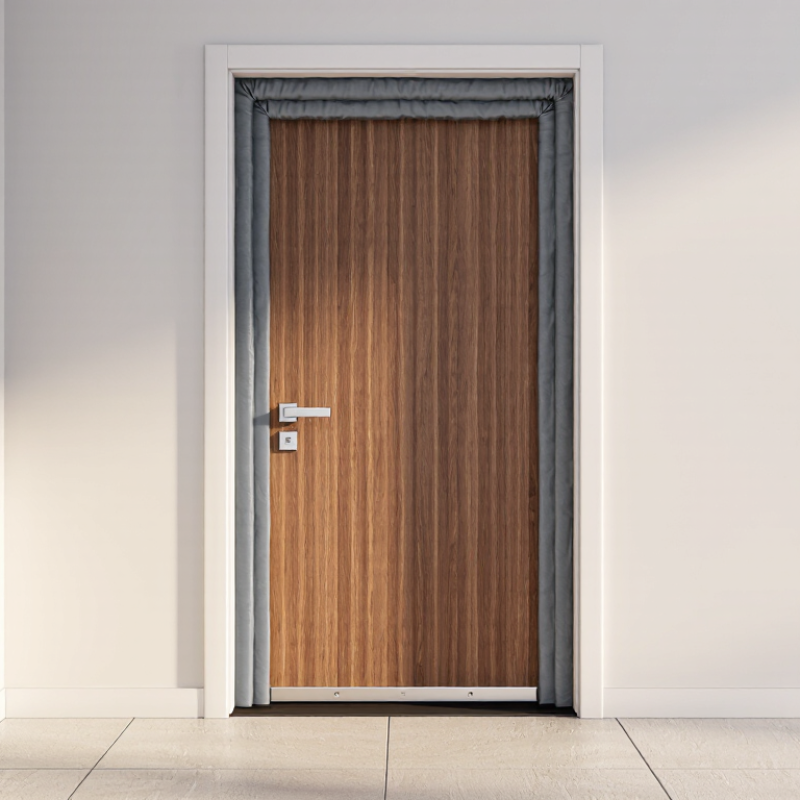
A door’s insulation performance begins with three measures: U-factor, R-value, and air leakage. U-factor shows how quickly heat passes through the door assembly. Lower is better. R-value describes resistance to heat flow, so higher is better. These values should be checked for the complete door system, not the slab alone. The frame, threshold, glass, and seals can change actual performance.
Air leakage is often the quiet failure. A small gap can move cold air across a hallway, especially during windy weather. The U.S. Department of Energy reports that air sealing may reduce annual heating and cooling costs by 10% to 20%. That figure is not a promise for every building. Local climate, door use, and installation quality matter greatly. Still, the direction is clear.
A compression seal should contact the frame evenly. Test it with a strip of paper. If the paper slides out easily, the seal may be weak. The U.S. Environmental Protection Agency also identifies doors as common locations for unwanted air movement in building-envelope guidance.
In field inspections, uneven thresholds often cause trouble. They are easy to overlook.
A high R-value cannot compensate for a visible gap.
It is also worth questioning laboratory ratings, because real doors open, close, settle, and age. Good sealing needs inspection, adjustment, and periodic replacement.
Top 10 Reasons Why Door Sealing Systems Improve Insulation
The U.S. Department of Energy reports that air leakage can cause 25–40% of residential heating and cooling losses. That range is significant. A loose door threshold can let cold air slide across the floor all winter. In summer, humid outdoor air can enter through the same opening. Door sealing systems reduce these uncontrolled exchanges. They also help rooms feel warmer, quieter, and less dusty. HVAC equipment may run for shorter periods, reducing energy demand and uneven indoor temperatures.
DOE Energy Saver guidance recommends weatherstripping movable door parts and sealing fixed gaps with suitable materials. Building science professionals also use blower-door testing to locate leakage before choosing repairs. This matters because a visible gap is not always the largest problem. The 25–40% figure is a national estimate, not a guaranteed saving for every home. Older buildings, windy sites, and poorly fitted doors may lose more. Newer homes may lose less. That uncertainty deserves attention.
Tips: Check the lower corners with a thin sheet of paper. If it slides through easily, the seal may be weak. Replace compressed weatherstripping, adjust the threshold carefully, and avoid blocking drainage paths. A professional inspection can confirm leakage with pressure testing. Do not seal ventilation openings accidentally. That mistake can create moisture problems. Even a modest repair can improve comfort, though results should be measured rather than assumed.
| No. | Reason | How Door Sealing Helps | Relevant Data or Building-Science Fact | Practical Result | Recommended Check |
|---|---|---|---|---|---|
| 1 | Reduces uncontrolled air leakage | Weatherstripping and door sweeps close gaps between the door slab, frame, threshold, and floor. | The U.S. Department of Energy states that air leakage can account for approximately 25–40% of the energy used for heating and cooling in a typical home. | Less conditioned air escapes and less outdoor air enters. | Inspect visible daylight and use a smoke pencil or tissue test around the perimeter. |
| 2 | Lowers heating demand | Seals reduce the replacement of warm indoor air with cold outdoor air during winter. | Infiltration adds a heating load because incoming outdoor air must be warmed to indoor temperature. | Heating equipment may cycle less frequently, especially near exterior doors. | Compare drafts and indoor temperature near the door before and after sealing. |
| 3 | Lowers cooling demand | A tighter door limits the entry of hot outdoor air and outdoor moisture during cooling season. | Infiltration increases both sensible heat gain and, in humid climates, latent moisture load. | The cooling system has less unwanted heat and humidity to remove. | Check for warm, humid air movement with the HVAC system operating. |
| 4 | Improves occupant comfort | Sealing removes cold drafts in winter and hot drafts in summer from occupied areas. | Air movement across skin can make occupants feel colder or warmer even when the thermostat setting is unchanged. | Fewer complaints about uncomfortable entryways and nearby rooms. | Use a basic thermometer or infrared camera to compare nearby surfaces. |
| 5 | Reduces pressure-driven infiltration | Continuous seals reduce airflow caused by wind and by the stack effect between warm and cool parts of a building. | Air moves through openings when pressure differs across the building envelope. | Door drafts are reduced during windy weather and strong indoor-outdoor temperature differences. | Test on a windy day or during a blower-door assessment. |
| 6 | Helps control indoor moisture | Sealing limits humid outdoor air entering through the door assembly in warm or humid climates. | Moisture carried by air can condense on sufficiently cold building surfaces. | Lower risk of moisture-related damage around gaps, thresholds, and adjacent finishes. | Inspect for condensation, staining, swelling, or deteriorated sealant. |
| 7 | Limits dust and outdoor pollutants | A tighter perimeter reduces uncontrolled entry of dust, pollen, and vehicle-related outdoor contaminants. | Airborne particles can enter through unintended openings in the building envelope. | Cleaner conditions near exterior doors, provided adequate mechanical ventilation is maintained. | Look for dust trails or dark marks along the frame and threshold. |
| 8 | Improves sound control | Sealing open air paths reduces direct sound transmission through cracks around the door. | Even small openings can reduce the effective acoustic performance of an otherwise solid door assembly. | Less outdoor noise may be noticeable near bedrooms, offices, and entry halls. | Check whether voices, traffic, or wind noise decreases after sealing. |
| 9 | Protects the door and surrounding materials | Proper seals help limit wind-driven rain and repeated exposure to uncontrolled air and moisture at joints. | Water intrusion can contribute to corrosion, wood deterioration, staining, and finish damage. | Fewer maintenance problems at thresholds, jambs, trim, and adjacent flooring. | Inspect after heavy rain; sealing does not replace proper flashing or drainage. |
| 10 | Supports whole-building energy efficiency | Door sealing complements insulation, air sealing at other envelope locations, and properly balanced ventilation. | Air sealing is most effective when treated as part of the complete building envelope rather than as an isolated repair. | More predictable heating and cooling performance and fewer localized comfort problems. | Use a whole-home energy audit or blower-door test to identify the largest leakage areas. |
Source basis: U.S. Department of Energy, Energy Saver guidance on air sealing and weatherization; general building-science principles for infiltration, moisture, and heat transfer. Actual energy savings vary with climate, door condition, occupancy, HVAC operation, and the size and location of air leaks.
A well-sealed door can make a noticeable difference to household comfort and energy use. ENERGY STAR findings indicate that weatherstripping may reduce energy bills by 10–20%, depending on the home, climate, and existing air leaks. This saving is not guaranteed, but it shows how small gaps can create significant costs.
During a basic inspection, check for daylight around the door frame, rattling panels, or a cool draft near the floor. Replace compressed weatherstripping, then adjust the door sweep so it touches the threshold without dragging.
Choose durable materials that resist moisture and temperature changes. A properly sealed door also reduces dust, outside noise, and uneven indoor temperatures. However, sealing one door will not solve poor insulation throughout an entire building.
Tips: Test gaps with a thin strip of paper. If it slides out easily, the seal may be too weak. Clean the frame before installation, and measure twice before cutting. Avoid blocking drainage paths around exterior doors. The repair can look simple, yet rushed fitting often leaves hidden gaps. Check the seal again after a cold or windy day. That small review may reveal problems missed during installation.
Door sealing systems play a quiet role in indoor comfort and HVAC efficiency. During building inspections, I have found that small gaps create noticeable temperature swings. A cold draft may enter beneath a door. Warm air may escape around a loose frame. The thermostat then calls for heating or cooling more often. Seals reduce these uncontrolled air movements and help rooms hold stable temperatures.
That stability changes how an HVAC system operates. Instead of correcting repeated heat loss, it can maintain the selected setting with fewer sudden load changes. Occupants may notice fewer cold ankles near entrances and less stuffiness in interior spaces. A properly fitted seal also limits dust, outdoor odors, and humid air. These details matter in offices, apartments, and storage areas with conditioned rooms.
Installation quality remains critical. A compressed seal that is too thick can make the door difficult to close. A weak seal may flatten within months. I once inspected a renovated doorway where the gasket looked complete, but light still showed along the lower corner. That imperfect result reminded me to test the whole perimeter, not just the visible frame. Sealing is not a cure-all. Poor insulation, oversized equipment, and open windows still increase energy demand. Regular checks, especially after heavy use, help keep comfort improvements measurable and dependable.
This representative building-science benchmark shows how targeted air sealing can reduce uncontrolled air leakage and related HVAC demand. Values are indicative contributions for a moderately leaky building and are not additive; actual results vary with climate, construction quality, pressure differences and HVAC operation.
A door can look closed while moving air around its edges. ASTM E283 measures this leakage under a controlled pressure difference, commonly 75 Pa. The test records airflow through the complete door assembly, including gaskets, sweeps, frames, and thresholds. Results are usually reported as L/s·m² or cfm/ft². Lower leakage means fewer uncontrolled drafts and less heat exchange.
The U.S. Department of Energy reports that air leakage may represent 25% to 40% of heating and cooling energy use in buildings. This figure makes perimeter sealing a practical insulation strategy, not merely a comfort detail. During testing, technicians inspect compression, corner joints, threshold contact, and latch-side alignment. Small gaps can become obvious when smoke or pressure reveals their path. Real sites are less perfect.
ASTM E283 data can support building-code documentation, but the test alone does not prove universal compliance. Local codes may specify different limits, pressure conditions, or product classifications. A qualified laboratory should state the test setup clearly. Sealing materials also age, compress, and collect dust. One successful laboratory result can therefore become misleading if installation quality is ignored. That is the part worth questioning. A durable design combines measured leakage performance with field inspection and maintenance records.
It shows how quickly heat passes through the complete door system. Lower values indicate better insulation performance.
R-value measures resistance to heat flow. Higher values are better. Check the frame, glass, threshold, and seals too.
Air may enter through gaps around the frame or threshold. A high R-value cannot fix visible openings.
Place a thin paper strip between the seal and frame. If it slides out easily, the seal may be weak.
Look for daylight, rattling panels, floor-level drafts, or uneven contact. Cold air can move across a hallway.
Reported savings often range from 10% to 20%. Other estimates suggest air leaks cause 25% to 40% of heating and cooling losses. These figures are not guarantees.
Clean the frame first. Inspect the lower corners, threshold, and drainage paths. Measure twice before cutting.
No. It may improve comfort, noise, dust, and temperature balance. Other doors, windows, walls, and ventilation still matter.
Replace compressed material or adjust a sweep when it no longer touches evenly. Check again after windy or cold weather.
Yes, if ventilation or drainage openings are blocked. Moisture may build up. A professional pressure test can reveal hidden leakage.
Understanding why door sealing systems improve home insulation begins with the way they control heat transfer and unwanted airflow. A properly sealed door reduces air leakage around the frame and threshold, helping maintain more stable indoor temperatures throughout the year. Since air leaks can account for a significant share of heating and cooling losses, effective weatherstripping and door seals may reduce energy waste and lower household utility costs by approximately 10–20%, depending on the home and climate.
Door sealing systems also improve comfort by reducing drafts, cold spots, and temperature fluctuations. With fewer uncontrolled air exchanges, heating and cooling equipment can operate more efficiently and experience more consistent demand. Key performance factors include the door’s U-factor, R-value, and measured air-leakage rate. Standardized testing, such as ASTM E283, evaluates how much air passes through a door assembly and supports building-code compliance. Together, these benefits make door sealing an important part of a well-insulated, energy-efficient home.

Orix Steel